Field notes
Why start with one frequent sweet drink?
Why PantryShift begins with one repeatable drink moment instead of asking a family to track or change everything.
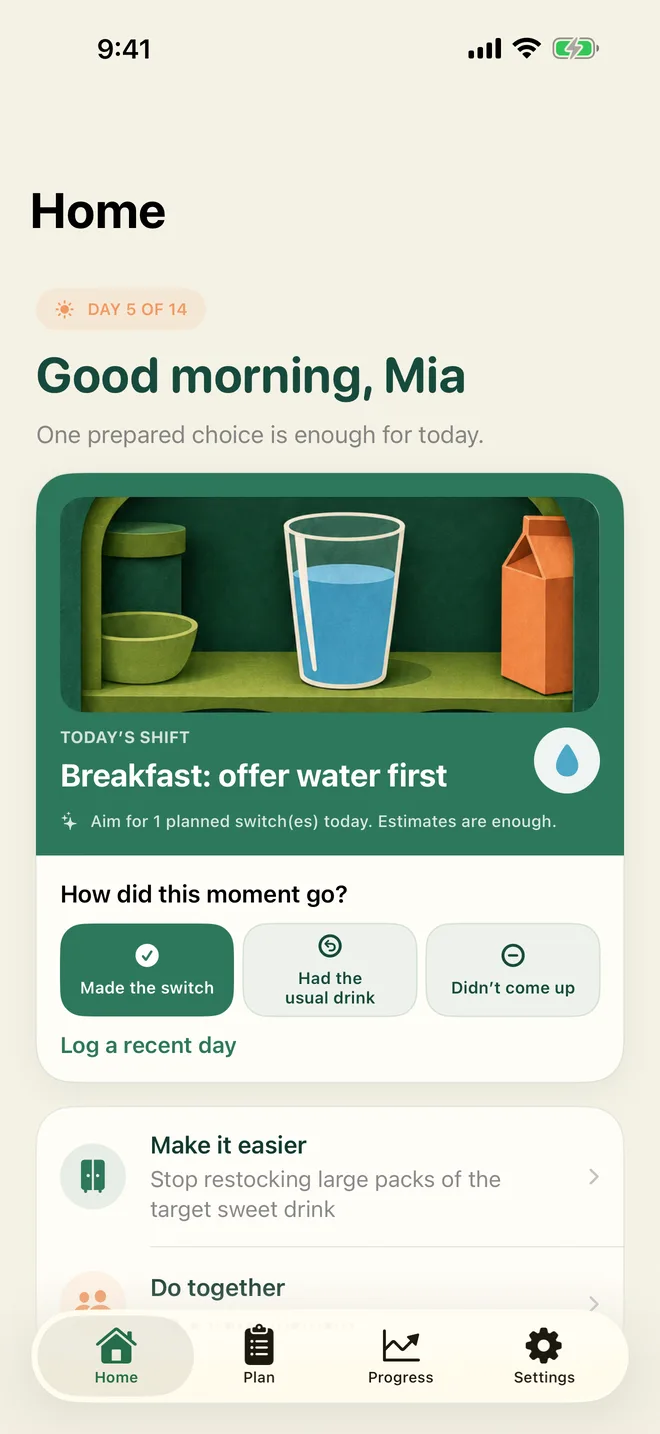
“Eat less sugar” is a large instruction. It can touch breakfast, snacks, yogurt, desserts, celebrations, school, and every caregiver’s habits. That breadth makes it hard to turn good intentions into a repeatable family routine.
A drink moment is easier to notice
Sweet drinks often happen in recognizable situations: breakfast, school pickup, sports, an outing, or bedtime. A repeatable moment is easier to estimate, prepare for, and review than an attempt to log an entire diet.
One source keeps the plan understandable
PantryShift asks a parent to confirm one frequent drink target after a three-day baseline. The app does not rank every food, total calories, or treat natural sugar in fruit and plain milk as though it were added sugar.
The environment can do some of the work
Families can make water or plain milk easier to see and grab, prepare an option for outings, and avoid automatically restocking a large pack of the target drink. Those are concrete changes that do not depend on a child winning a willpower contest.
The child is not the score
The parent manages the plan and the environment. Child mode uses positive real-world tasks without showing sugar grams, weight, calories, failed days, rankings, or streak pressure.
PantryShift is designed around evidence-informed behavior-change methods, but the complete product has not been clinically proven. Its early testing is meant to learn whether families can complete the plan, reduce drink frequency, and avoid making food conflict worse.